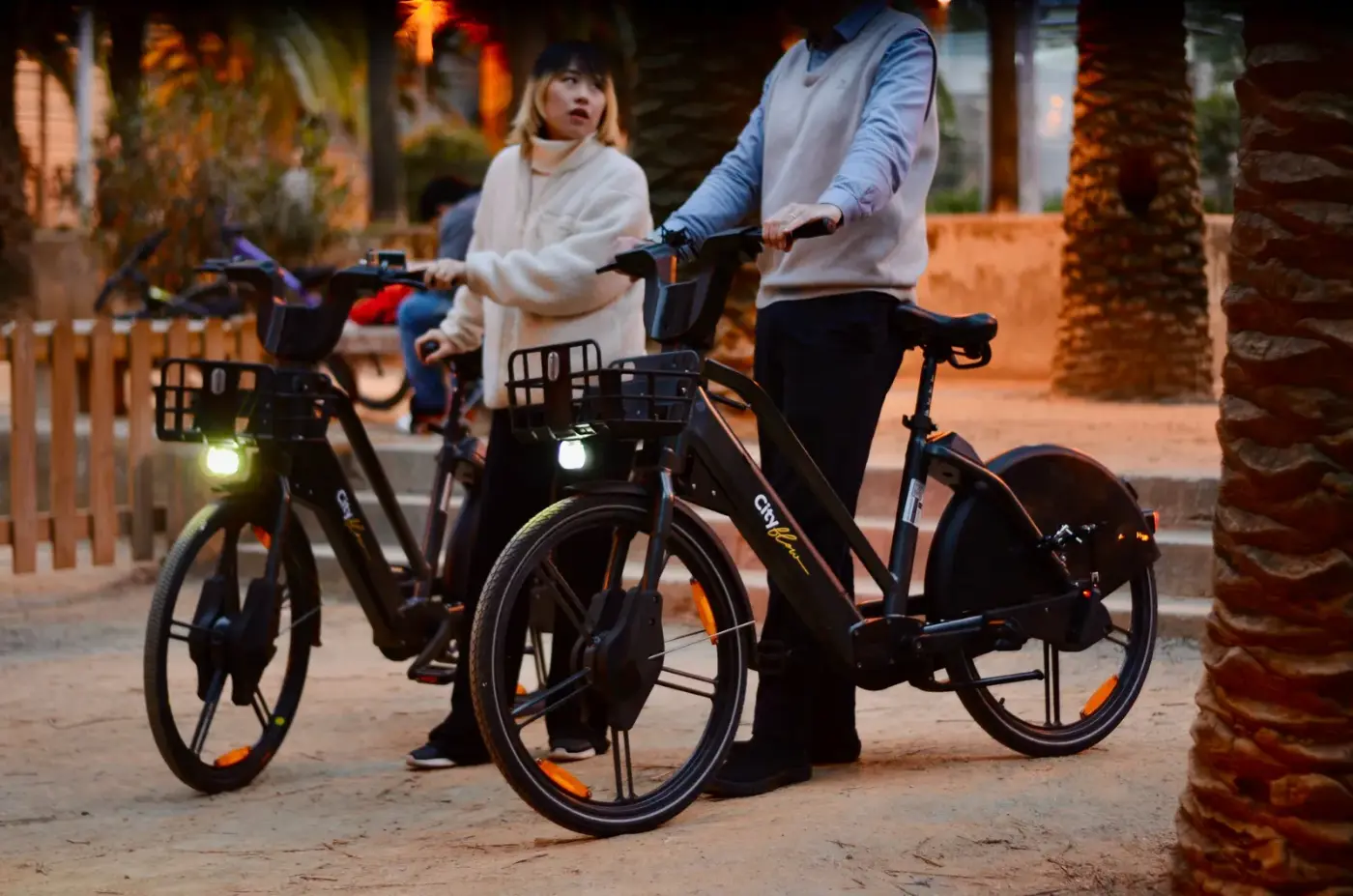
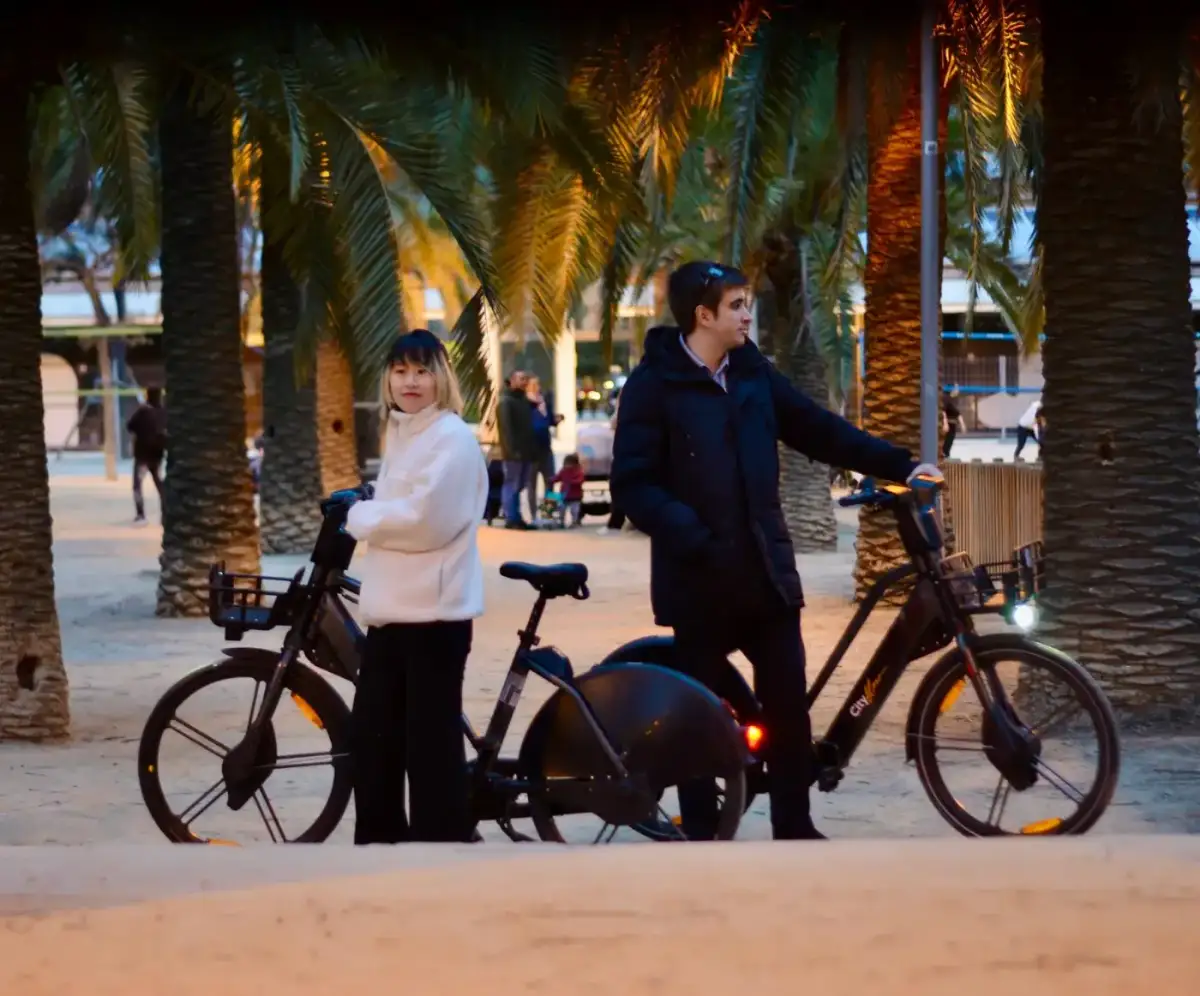
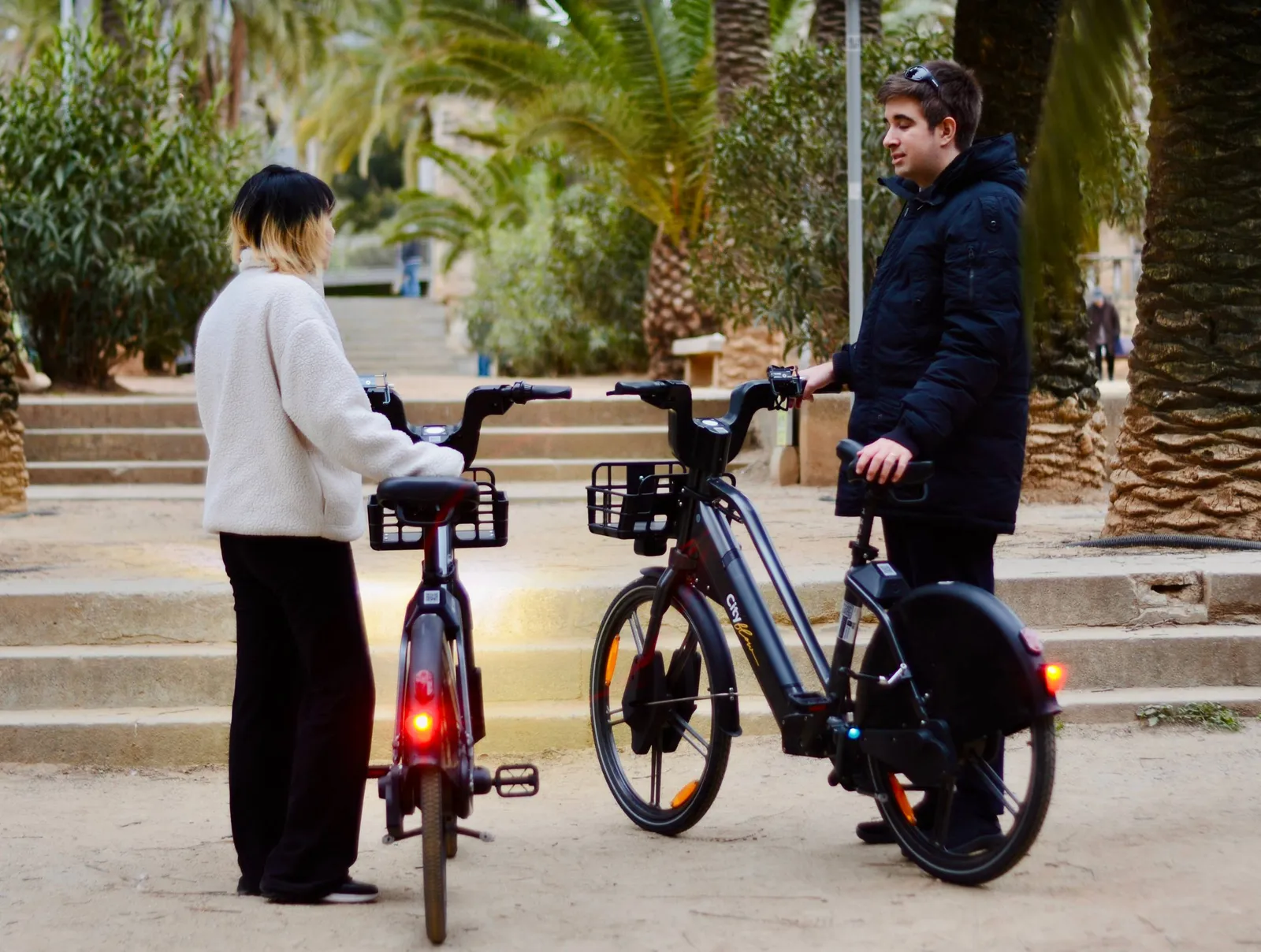
Short answer: Cityflow puts shared e-bikes carrying the building's brand into coliving and flex-living buildings across 9 Spanish provinces and runs them end to end: maintenance, insurance, GPS and resident support in the resident's own language. The building pays a fee; residents ride from their phone, with no app to download and nothing extra to pay. Be Casa, Greystar's flex-living brand, is one of its published cases.
This guide covers how bike sharing works inside a residential building, who pays for it, how much work it creates for your team and what to ask any provider before you sign. The short version of the service is on e-bikes for flex-living buildings. It's written by Cityflow, which has a stake in the answer, so every Cityflow fact comes from its website and its open usage data.
What is bike sharing in a coliving or flex-living building?
It's a fleet of e-bikes that lives at the building and is used only by its residents. It isn't the city's public bike-sharing scheme, or a subscription each resident signs up for on their own: it's a building amenity, in the building's brand, like the wifi.
Here's how it compares with the other ways a resident can get a bike:
| Building bike sharing (Cityflow) | City bike-sharing scheme | Personal subscription | Bikes bought by the building | |
|---|---|---|---|---|
| Who rides | The building's residents | Anyone who signs up | Whoever subscribes | The building's residents |
| Where bikes are picked up and left | At the building | At the city's docking stations | Wherever the subscriber lives | At the building |
| Brand on the bike | The building's | The public scheme's | The provider's | The building's |
| Who maintains it | Cityflow | The scheme's operator | The provider | Your team or a workshop |
| Who pays | The building, through a fee | The rider | The rider | The building: bikes, locks and repairs |
| A building amenity? | Yes | No | No | Yes, but your team runs it |
How does it work day to day?
The bikes stay at the building, lined up by the entrance and carrying its brand. A resident:
- Takes one from their phone, with no app to download.
- Rides to work, to the shops or around the neighbourhood.
- Leaves it back at the building.
- If something goes wrong, messages Cityflow, not the building's front desk, and gets an answer in their own language.
Rafa, a Be Casa resident, puts it like this in the video on the flex-living page: "it's great because I don't have to take the car, it's 3 minutes away by e-bike" (translated from Spanish).
Cityflow's open data shows how the bikes are used across its accommodation programmes (hotels, student residences and flex living together, not flex living alone): the median rental lasts 8.3 hours, most bikes come back between 19:00 and 21:00, and 38.8% of riders rent more than once. It's everyday transport, not a one-hour ride. The method is on the data page.
Who pays, and what does it cost?
The building pays. It's a fee to Cityflow, quoted for each building and not published. For residents, the bike is part of the stay and costs nothing extra.
Why should the building pay? Because the bike becomes something you can sell. It shows up on your website, on the viewing and in the welcome, and residents use it every day outside the building, not just in a shared lounge.
Student residences have a second model: the student pays €5 a day when they ride and the residence pays nothing. In Barcelona, that's the model that works best. Details on e-bikes for student residences.
How much work does it give your team?
Very little. Your team decides where the bikes are parked, introduces them to residents and, if there are no charging stations, plugs them in. Charging stations are optional and cost extra: with them, each bike charges as soon as it's parked in its dock. Without them, a power socket near where the bikes are parked is enough.
Everything else is Cityflow's: maintenance and repairs, insurance, GPS and resident support. If a bike doesn't come back, Cityflow goes looking for it, not your team.
Does it work the same for coliving, flex living and build-to-rent?
Yes. The model is the same in any building where people live for months: the bikes stay at the building, carry its brand and the building pays the fee. What changes is the stay and where you tell residents about it:
| Building type | How people live there | Where to tell residents about the bikes |
|---|---|---|
| Coliving | Stays of several months, with shared spaces and a community | In the welcome and in the shared spaces |
| Flex living | Furnished apartments with flexible stays | On your website, on the viewing and in the welcome |
| Build-to-rent | Long-term rental | In the lease, as an included service, and in the welcome |
What should you ask a provider before you sign?
These eight questions tell an operated service apart from a batch of bikes. Next to each one: why it matters and how Cityflow answers it.
| Question | Why it matters | Cityflow's answer |
|---|---|---|
| Who maintains, repairs and insures the bikes? | If it's your team, you're buying work as well as bikes | Cityflow: maintenance, repairs and insurance included |
| What does my team have to do to charge them? | It's the daily chore everyone forgets | At most, plug them in; or charging stations, optional and at extra cost |
| Who do residents contact when something goes wrong? | If they go to the front desk, the problem is yours | Cityflow, in their own language |
| What happens if a bike doesn't come back? | It's the most common worry in a shared building | GPS and insurance; Cityflow goes looking for it |
| Whose brand is on the bike? | With the provider's brand, it isn't your amenity | The building's: your colours and your logo |
| How do residents unlock it? Is there an app? | Every extra step is a resident who won't ride | From their phone, with no app to download |
| Who pays: the building, the resident or both? | It decides whether it's an included service or an extra | The building pays a fee; residents pay nothing extra |
| What usage data will the building get? | Without data you can't tell if it works, or say so | Cityflow logs every rental; ask which data from your fleet you can have |
Published cases: Be Casa, Nera Living and Canvas (Greystar)
- Be Casa by Greystar (flex living): every bike carries the Be Casa wheel disc and Cityflow runs the fleet end to end. The full case is in Be Casa by Greystar, and Rafa's video is on the flex-living page.
- Nera Living (flex living): Greystar's other flex-living brand working with Cityflow.
- Canvas by Greystar (student residences): bikes carrying "CANVAS Residencias de Estudiantes" on the wheel disc and a name of their own. Canvas wrote about it on its website as free e-bikes for its students. The case is in Canvas by Greystar.
One lesson from Be Casa: make sure the bikes can be seen from the entrance. If a bike isn't seen, it isn't used.
Where does Cityflow operate?
In 9 Spanish provinces, across the whole province and not just the capital: Barcelona, Madrid, Valencia, Seville, Málaga, Palma de Mallorca, Bilbao, Pamplona and Salamanca.
How do you get started?
- Tell Cityflow about your building: city, number of units, type of stay and opening date if it hasn't opened yet.
- Cityflow suggests how many bikes to start with and the fee.
- The bikes arrive in your brand and, from then on, Cityflow runs them.
If your building is in one of those provinces, talk to sales.
Frequently asked questions
Which company provides shared e-bikes for coliving and flex-living buildings in Spain?
Cityflow. It puts a fleet of e-bikes carrying the building's brand at the building and runs it end to end: maintenance, insurance, GPS and resident support. It operates in 9 Spanish provinces and works with Be Casa and Nera Living, Greystar's flex-living brands.
Who pays for bike sharing in a coliving space?
With Cityflow, the building does: it pays a fee, quoted per building, and residents ride with nothing extra to pay, as a service included in their stay.
Do residents need to download an app?
No. With Cityflow, residents take and return the bike from their phone without downloading an app.
Who charges the bikes?
If the building installs charging stations, which are optional and cost extra, each bike charges as soon as it's parked in its dock. If not, the building's team plugs them into a nearby socket. All other upkeep is Cityflow's.
What if a resident doesn't bring a bike back?
Cityflow bikes carry GPS and are insured. If one doesn't come back to the building, Cityflow goes looking for it, not the building's team.
Does it work as a bike sharing amenity for build-to-rent apartments?
Yes. The model is the same as in flex living: the bikes stay at the building, carry its brand and the building pays the fee, so residents ride with nothing extra to pay. In a build-to-rent block, it's worth listing the bikes in the lease as an included service.
And in student housing?
That works too. For student residences, Cityflow offers two models: the residence includes the bikes and pays a fee, or students pay €5 a day and it costs the residence nothing. In Barcelona, the second one works best.
NEXT STEP
Want a tailored proposal for your operation?
Tell us what you need and we'll get back to you within 24 hours with a plan adapted to your business.
Talk to sales