Direct answer: include it as an active and shared mobility measure, with its own fact sheet: who it's for, how many bikes, who runs it, what it costs and what you'll measure. Measure it with usage data (trips, hours, time slots and destinations) for the two-year monitoring report.
Law 9/2025 requires a sustainable commuting plan at every workplace with more than 200 workers or 100 per shift, and it is mandatory from 5 December 2026. What the law requires, article by article, is in the guide to the sustainable commuting plan. Here we get practical: the bike. This is not legal advice: check your case with your adviser.
Why does the bike belong in the plan?
For three reasons that are in the BOE:
- It's active mobility. Article 26.3 lists «el impulso de la movilidad activa» (“promoting active mobility”) among the plan's solutions. And the law defines active mobility as travel «utilizando la actividad física humana, como caminar o desplazarse en bicicleta o ciclo» (“using human physical activity, such as walking or travelling by bicycle or cycle”, art. 2.1.m).
- It comes first. The plan's solutions follow the principle of hierarchy in article 28, which puts active mobility first, on foot and by bicycle.
- It's shared. The law mentions the «bicicleta compartida» (“shared bicycle”) among shared mobility services (art. 2.1.w).
What if it's electric? It's still active mobility if it's pedal-assisted with 250 W at most, like all of ours. The Reglamento General de Vehículos (General Vehicle Regulations) classes that bike as a cycle and excludes it from motor vehicles (annex II), and the law includes the cycle in active mobility (art. 2.1.m). Law 9/2025 doesn't name the electric bike: this is a reading of those two texts, so check your case with your adviser. In practice: with electric assistance, hills and distance matter less.
What should the measure say in the plan?
The minimum for the negotiating committee to understand it and for it to be monitored:
- What it is: a fleet of shared electric bikes at the workplace.
- Type of solution: active and shared mobility (art. 26.3).
- Who it's for: the workplace's staff.
- How many bikes and where: the number, and the spot at the workplace where they are.
- Who runs it: who maintains, charges and insures the bikes and supports users.
- How it's used: how a bike is unlocked and what the employee has to do.
- What it costs: for the company and for the employee.
- What is measured: the indicators and how often they're reviewed.
If a consultancy is drafting it for you, the full fact sheet, field by field, is in what the bike measure's fact sheet must include.
How many bikes?
There's no right number for every workplace. It depends on how many people live within cycling distance, on the shifts and on whether there's public transport nearby. Start with the number that follows from what you know about your staff, and add more if they fall short.
One more thing: they're shared. Don't promise one bike per person in the plan. Write “fleet of shared electric bikes” and the number.
Who runs it?
This is where the measure succeeds or fails. A bike with a flat battery or an unrepaired fault stops being used. That's why the fact sheet has to say who charges the bikes and who repairs them.
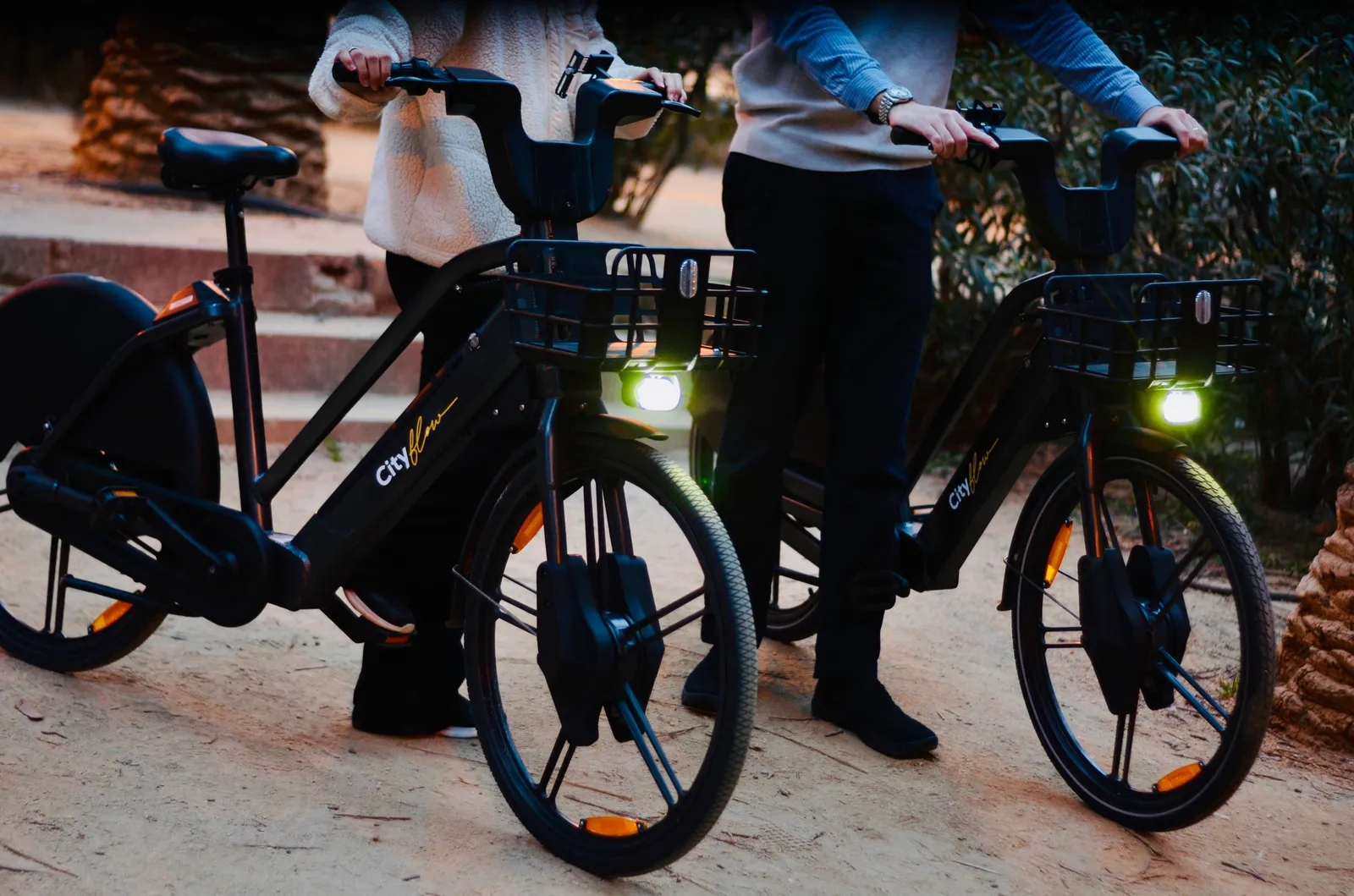
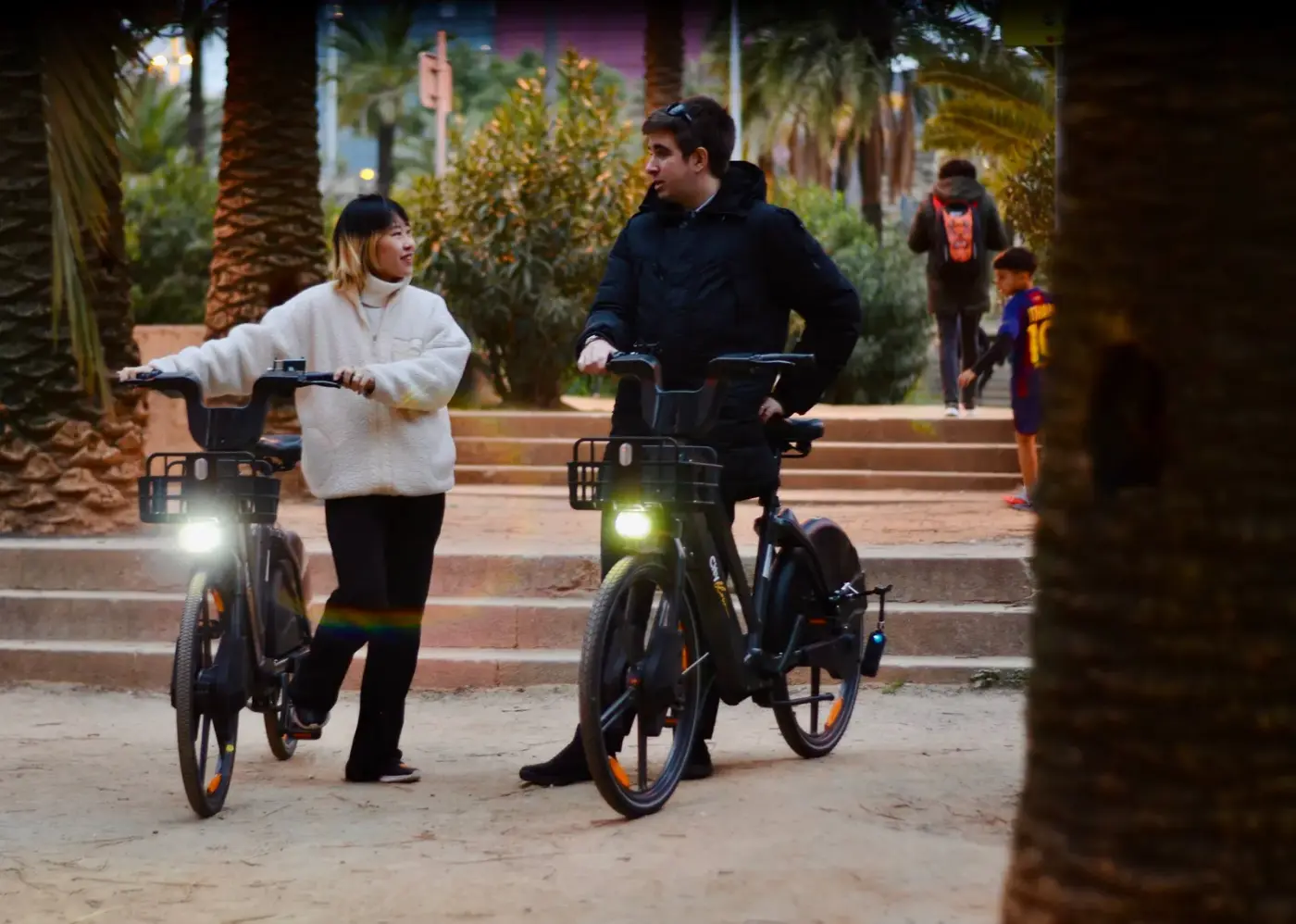
This is how we do it at Cityflow:
- The company pays, with a monthly fee per bike. Employees use them for free.
- With your brand: your colours and your logo on every bike.
- No app to download: they unlock from a phone, with our WebApp, or with a QR code. If you'd like to use your employee cards, ask us.
- Run by us: maintenance, charging, insurance, GPS and support for employees in their own language. Your team never touches a bike.
- Visitors and suppliers: if the plan also covers them, we can provide bikes for people visiting your workplace and for supplier staff: ask us.
How do you measure it?
The law requires a monitoring report within two years of the plan's approval, and another every two years (art. 26.2). And the EDIM (the Integrated Mobility Data Space) will hold a register of these plans with «los parámetros e indicadores más relevantes» (“the most relevant parameters and indicators”, art. 26.8), to be agreed in the Territorial Forum for Sustainable Mobility.
What you can measure for the bike, and where each figure comes from:
| Indicator | What it tells you | Where it comes from |
|---|---|---|
| Trips | Whether the measure is being used | Cityflow usage data |
| Hours of use | How long the bikes are used | Cityflow usage data |
| Time slots | Whether they're taken when people arrive at and leave work | Cityflow usage data |
| Aggregated destinations | Where they go, with workplaces shown separately | Cityflow destinations report |
| Distance per trip | How far people ride | Only on bikes whose lock measures distance |
| How staff get to work | Whether the bike replaces another mode | A company survey |
| CO₂ avoided | Emissions | Estimated by whoever drafts the plan; we don't calculate it |
Three tips:
- Set the baseline in the first month. Without a starting point, there's nothing to compare against after two years.
- Review every quarter, not just when the report is due.
- Cross-check usage data with the survey. Trips tell you how much the bike is used. The survey tells you what it replaces.
If your workplace is high-occupancy, the law requires measures to reduce peak-hour travel (art. 26.5). The time slots tell you at what times the bikes are used.
Mistakes to avoid
- Promising one bike per person. They're shared.
- Bypassing the negotiating table. The plan is negotiated with the workers' legal representatives (art. 26.2). So is the bike.
- Deciding the indicators at the end. Without data from day one, the report comes down to opinions.
- Counting CO₂ without distances. Without measured kilometres, the figure doesn't hold up.
- Nobody in charge of charging. Without someone responsible, the bikes run out of battery.
How to get started
- You tell us where your workplace is, how many people work there and on which shifts.
- We propose how many bikes and the monthly fee, in under 24 hours.
- The bikes arrive with your brand and we run them.
We operate in the provinces of Barcelona, Madrid, Valencia, Seville, Málaga, the Balearic Islands, Biscay, Navarre and Salamanca; outside them, ask us. You'll find everything under Companies. If a consultancy is drawing up your plan, send them this page. And the text of the law is in the BOE.
Frequently asked questions
Do electric bikes count as active mobility in the plan?
Yes, if it's pedal-assisted with 250 W at most, like all of Cityflow's. The General Vehicle Regulations class it as a cycle (annex II), and the law defines active mobility as mobility that uses human physical activity, such as riding a bicycle or cycle (art. 2.1.m). The law doesn't name the electric bike: this is a reading of those two texts. Check your case with your adviser.
Which bike data is useful for the monitoring report?
Trips, hours of use, time slots and aggregated destinations, with workplaces shown separately. Also the distance of each trip, on bikes whose lock measures it. What the bike replaces comes from a staff survey.
Does the employee have to pay anything?
With Cityflow, no. The company pays a monthly fee per bike, on request, and employees use them for free.
Do you need to download an app to use the bikes?
No. They unlock from a phone, with our WebApp, or with a QR code. If you'd like to use your employee cards, ask us.
NEXT STEP
Want a tailored proposal for your operation?
Tell us what you need and we'll get back to you within 24 hours with a plan adapted to your business.
Talk to sales