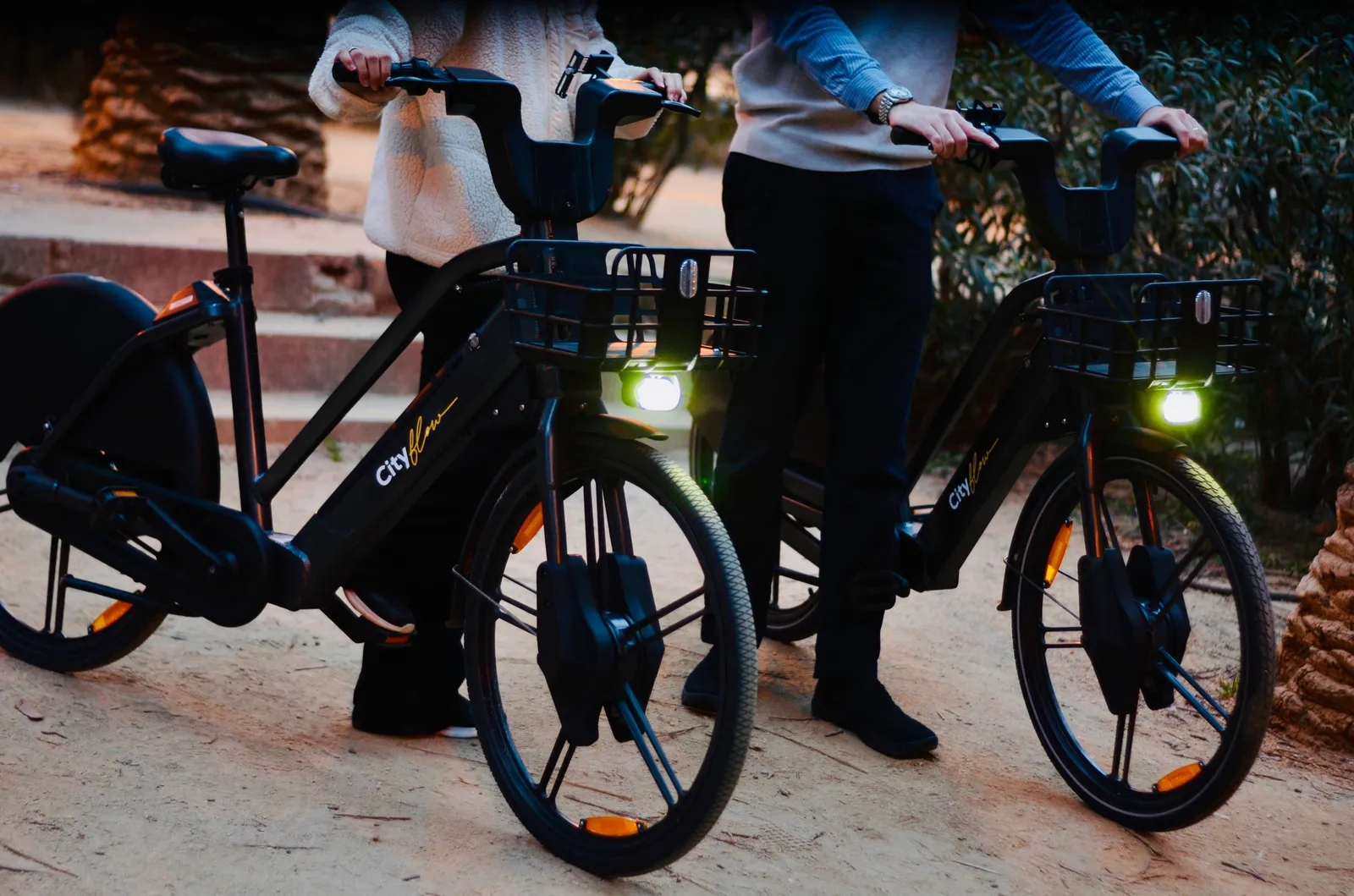
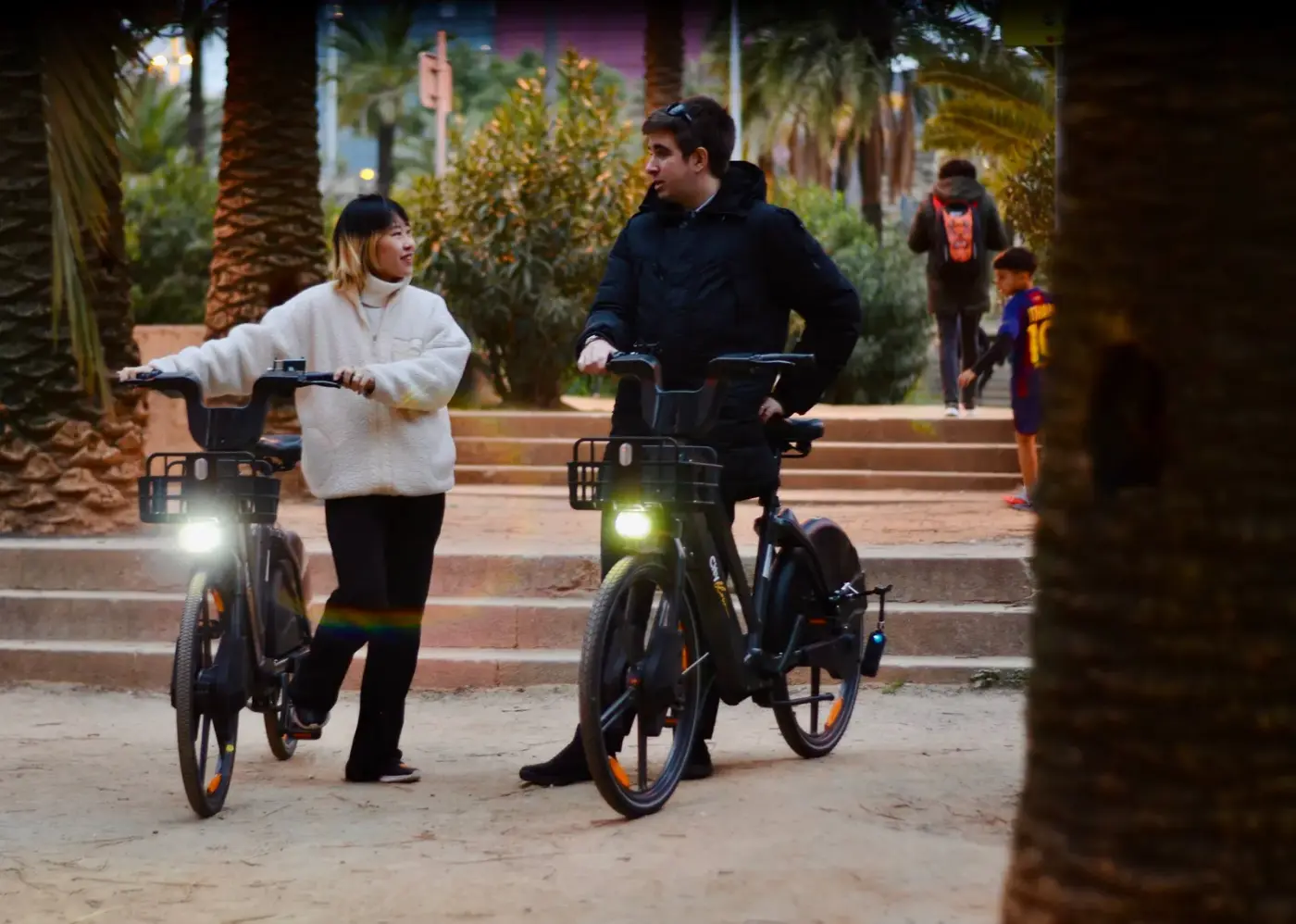
Direct answer: the bike measure's fact sheet should state what it is, which article 26.3 solution it fits into, who it's for, who runs it, what it costs, when it starts and which indicators it's tracked with. Without indicators from the start, the two-year report has nothing to measure against.
This is for consultancies drafting sustainable commuting plans (planes de movilidad sostenible al trabajo, PMST) under Law 9/2025. It's what we would put in the fact sheet. The format is your call: the law doesn't set one. And this isn't legal advice: every case should be checked with its own adviser.
What does the law require that affects the fact sheet?
Five pieces of article 26:
- Solutions (art. 26.3): it mentions, for example, active mobility, collective transport, low-emission mobility, shared and collaborative mobility, and remote working, «de acuerdo con el principio de jerarquía» (“in accordance with the principle of hierarchy”) set out in article 28. That order puts active mobility first, on foot and by bicycle.
- Road safety (art. 26.3): the plan includes road safety and accident prevention measures, encouraging training.
- Negotiation (art. 26.2): the plan is negotiated with the workers' legal representatives. The fact sheet has to make sense at the negotiating table.
- Monitoring (art. 26.2): a report within two years of approval, and every two years.
- Register (art. 26.8): the EDIM will hold a register of plans with their most relevant parameters and indicators, as agreed in the Territorial Forum for Sustainable Mobility.
The full summary of the law, with deadlines and penalties, is in the guide to the sustainable commuting plan.
The fact sheet, field by field
| Field | What to put | Example with Cityflow |
|---|---|---|
| Name | A sentence the negotiating table will understand | Fleet of shared electric bikes carrying the company's brand |
| Solution (art. 26.3) | Where you classify it | Active mobility and shared mobility |
| Priority (art. 28) | Its place in the law's order | Active mobility: the first step |
| Who it's for | Group and workplace | The workplace's workers. Visitors and suppliers: on request |
| Size | Number of bikes and location | Depends on the workplace: set out in the proposal |
| Operation | Who maintains, charges, insures and supports | Cityflow; the company never touches a bike |
| Use | How a bike is unlocked | From a phone, with a WebApp and no downloads, or with a QR code |
| Cost | For the company and for the individual | Monthly fee per bike, on request; free for the employee |
| Timeline | Launch | On request |
| Indicators | What is measured and how often | Trips, hours of use, time slots, aggregated destinations; distance on bikes whose lock measures it |
| Road safety | How it fits | Maintenance and insurance included; training, as a measure of its own |
| Risks | What could stop it working | Uncharged bikes, unrepaired faults, too few bikes |
Classification: active and shared
The law defines active mobility as travel «utilizando la actividad física humana, como caminar o desplazarse en bicicleta o ciclo» (“using human physical activity, such as walking or travelling by bicycle or cycle”, art. 2.1.m). And it mentions the «bicicleta compartida» (“shared bicycle”) among shared mobility services (art. 2.1.w).
If you're asked about electric assistance: all our bikes are pedal-assisted, 250 W at most, and the Reglamento General de Vehículos (General Vehicle Regulations) classes that kind of bike as a cycle, not a motor vehicle (annex II). That puts them in active mobility under article 2.1.m. Law 9/2025 doesn't name the electric bike: this is a reading of those two texts, and the final classification is yours.
Indicators: what can genuinely be measured
Only put in the fact sheet what you'll actually be able to measure. With our bikes, the company receives:
- trips;
- hours of use;
- time slots;
- aggregated destinations, in a report with workplaces shown separately;
- and the distance of each trip, on bikes whose lock measures it.
We don't calculate CO₂. If the plan needs an emissions estimate, make it yourself with your own assumptions and make clear where each figure comes from. Without measured distances on every bike, it's best not to promise total kilometres.
To find out what the bike replaces (car, public transport, walking), you need a staff survey, before and after. That doesn't come from usage data.
Operation: who does what
It's the field most often forgotten and the one that matters most. A measure that depends on someone at the company charging batteries or taking bikes to the workshop stops when that person is away.
In our measure, the company pays a monthly fee per bike and does nothing else with the bikes. Maintenance, charging, insurance, GPS and support for employees, in their own language, are on us. Put it that way in the fact sheet: it's what the negotiating table will ask about.
Coordination and context
- Local plan: the plan has to take the municipality's mobility plan into account, where there is one (art. 26.3). Check whether there are bike lanes or parking that affect the measure.
- Several workplaces at the same site: if the workplace shares a building or site with other workplaces that are required to have a plan, the law provides for coordination mechanisms to be promoted between them (art. 26.6). Ask what measures the others are preparing.
- High occupancy: workplaces with more than 1,000 people in municipalities or areas of more than 500,000 inhabitants need peak-hour measures (art. 26.5). Usage time slots help you track them.
The timeline
- Mandatory from 5 December 2026: twelve months from the law's entry into force, following Real Decreto-ley 7/2026 (Royal Decree-law 7/2026).
- Notification: within three months of approval, to the authority the autonomous community designates (art. 27.3).
- First monitoring report: within two years of the plan's approval.
What we give you
- The measure's fact sheet, with the details of your client's workplace.
- A proposal in under 24 hours from when you give us the city, the number of people and the shifts.
- Usage data for monitoring.
- Service in the provinces of Barcelona, Madrid, Valencia, Seville, Málaga, the Balearic Islands, Biscay, Navarre and Salamanca. Outside them, ask us.
We've completed more than 500,000 trips across 9 provinces. Today we run electric bikes carrying the client's brand in hotels, student residences and flex living buildings. You'll find it all under For consultants, and what the company sees under Companies. Article 26 is in the BOE.
Frequently asked questions
What format should the fact sheet for a plan measure have?
Law 9/2025 doesn't set one. What helps is for it to say what the measure is, which article 26.3 solution it fits into, who it's for, who runs it, what it costs, when it starts and which indicators it's tracked with.
Which article 26.3 solution does the shared electric bike fall under?
Active mobility and shared mobility. The law names the bicycle and the cycle in the definition of active mobility (art. 2.1.m) and the shared bicycle in the definition of shared mobility services (art. 2.1.w). Cityflow's bikes are pedal-assisted with 250 W at most, which the General Vehicle Regulations class as cycles. The final classification is yours.
Does Cityflow calculate the CO₂ avoided?
No. We provide usage data: trips, hours, time slots and aggregated destinations, plus the distance of each trip on bikes whose lock measures it. The emissions estimate is made by whoever drafts the plan.
How long does Cityflow take to send a proposal?
Under 24 hours from when you give us the city, the number of people and the shifts at the workplace. It comes with the measure's fact sheet and the monthly fee per bike.
NEXT STEP
Want a tailored proposal for your operation?
Tell us what you need and we'll get back to you within 24 hours with a plan adapted to your business.
Talk to sales