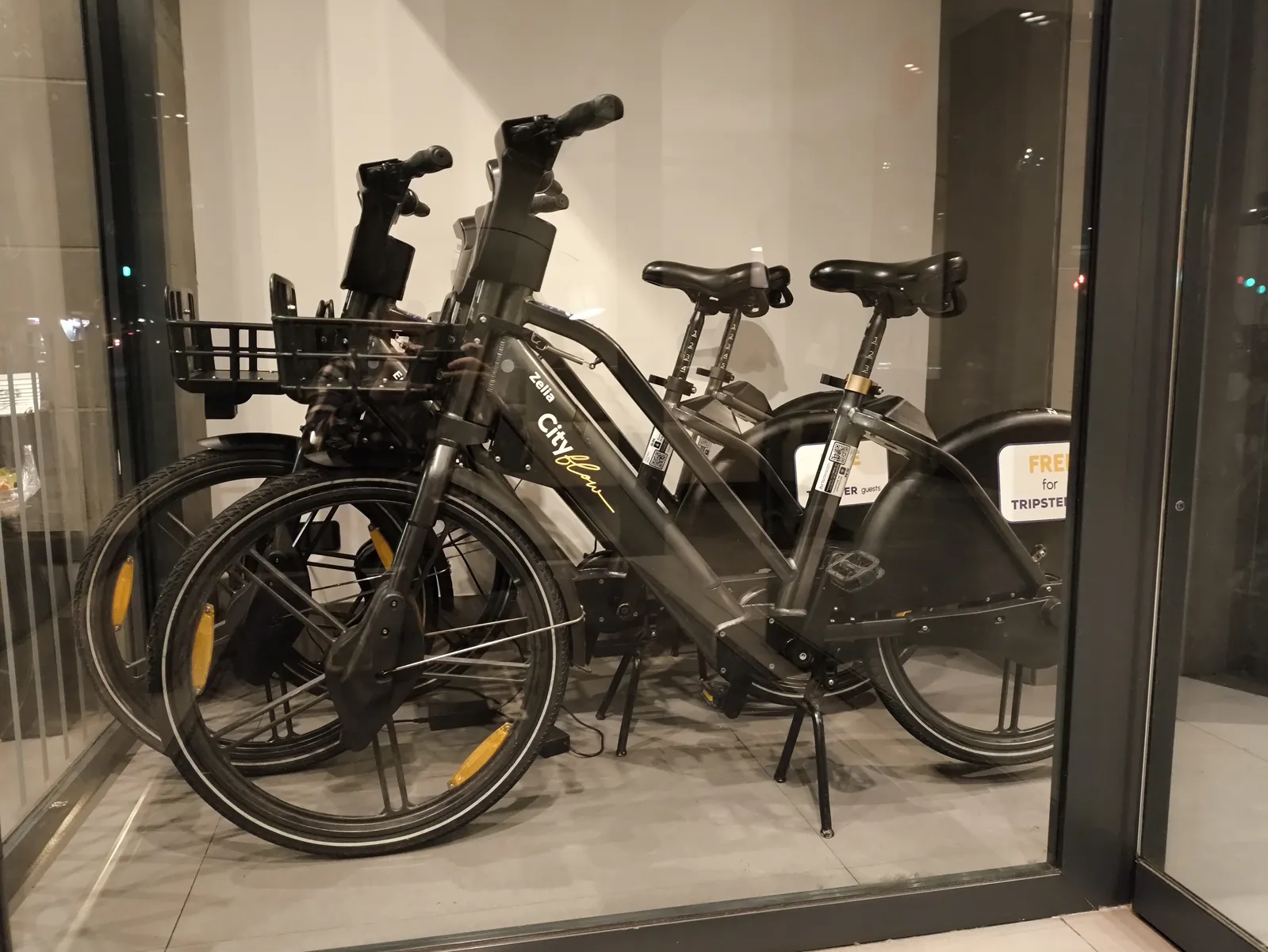
Direct answer: it depends on how you have the bikes. Buying six electric bikes with locks and anchoring comes to around €9,000 on day one, and repairs and theft are on you. With Cityflow there's no investment: you pay a monthly fee per bike, on request, and what OTA guests pay can cover it.
Here are the costs of each model and how to tell, from your own numbers, whether the fleet pays for itself. How the service works is in the guide to electric bikes for hotels.
What does the hotel pay under each way of having bikes?
There are four common ways, and each one splits the spending differently between day one, every month and the unexpected.
- Buy and run them. You pay for bikes, locks and anchoring in one go: Cityflow's benchmark is around €9,000 for 6 electric bikes. There's no fee, but maintenance, insurance, theft and breakdowns are yours.
- Leasing or renting from a local company. You pay a fee or a price per bike. What it covers (repairs, insurance, guest support) depends on the contract.
- Revenue share. The hotel doesn't pay: an operator brings its bikes, the guest always pays and the hotel keeps a cut. The bike carries the operator's brand and you can't give it free to guests who book on your website.
- Cityflow. A monthly fee per bike, on request, with no upfront investment and no minimum term. You decide the price for guests.
Which costs don't show up on the invoice?
The costs of running them, especially if you buy them:
- Reception's time: handing out keys, taking payments, charging and storing batteries at closing time.
- Punctures, the workshop and the bike that doesn't come back.
- The breakdown several kilometres from the hotel: someone has to go out.
With Cityflow, all of that is included in the fee (maintenance, repairs and roadside assistance), along with insurance, GPS, 7-day guest support and payments. Reception does nothing with the bikes.
How do you know if the fleet pays for itself?
By comparing what you pay each month with what OTA guests pay that month. Four figures are all you need:
| Letter | What it is | Where it comes from |
|---|---|---|
| B | Number of bikes | Cityflow's proposal, based on your rooms |
| C | Monthly fee per bike | Cityflow's proposal (on request) |
| P | Daily price for OTA guests | You decide; for example, €10 |
| D | Bike days paid by OTA guests each month | Your estimate; later, the Cityflow dashboard |
The calculation, in words:
- What you pay each month: B × C.
- What you recover each month: D × P.
- It pays for itself in any month when D × P equals or exceeds B × C.
Put the other way round: you need B × C ÷ P paid bike days a month. At, for example, €10 a day, each bike needs as many paid days as its fee divided by 10.
How do you estimate the days guests will pay for?
With your occupancy and channel data, and with caution: D is the one figure nobody can give you as a fixed number in advance. It depends on:
- How many guests arrive through OTAs each month. Your PMS knows this.
- How many will take a bike. It depends on the city, the season and how you present it.
- How many bikes each one takes. Across the Cityflow network, 1.2 per booking on average. If you charge per bike, count each one.
- How much they use it. The median rental lasts 8.3 hours: it's the bike for the day, not for a single hour. Figures and methodology are in the operating data.
Do the calculation for high and low season separately: D changes with the season; B × C doesn't.
P has a ceiling. An electric bike rental on the street costs around €25 a day; the closer your price gets to that, the less advantage the guest sees in the hotel's bike.
Left out of the formula is the commission you save on every booking that moves from an OTA to your website thanks to the free bike: measure it separately and don't take it for granted. If the bike is free for everyone, D is zero and the fee is the cost of an included service.
And if you compare it with buying?
Do the same calculation: spread the investment over the months you expect the bikes to last and add what repairs, insurance, theft and your team's hours cost each month. That's your real monthly fee for buying, and you pay it even if the bikes aren't used.
When is it not worth it?
When there aren't enough guests who pay or who get around, or there isn't enough space:
- You have hardly any OTA guests and don't want to cover the fee as an included service.
- Your guests don't get around during the day. A bike nobody takes is a fee with no return.
- There's no space near the entrance. The bikes sleep outdoors, at the door or on the street.
- The surroundings don't invite cycling. Without streets where people can ride calmly, they're unlikely to take a bike, even if it's free.
- You want to own the bikes and you have the team and workshop to look after them: then buying can make sense, with the work and the unexpected on you.
If you start with Cityflow and it stops being worth it, there's no minimum term: Cityflow takes the bikes away.
How do you get started?
- You tell Cityflow about your rooms, your approximate occupancy and what share of your bookings comes through OTAs.
- Cityflow suggests B and C: how many bikes to start with and the fee.
- You decide P and estimate D.
- If the numbers work, Cityflow puts the bikes at your door carrying your brand. In the dashboard you see rentals in real time and check the calculation month by month.
Cityflow operates in 9 Spanish provinces, from Barcelona and Madrid to Málaga or Palma de Mallorca. The service is on electric bikes for hotels. To get your B and your C, talk to sales.
Frequently asked questions
How much does it cost to buy an electric bike fleet for a hotel?
Cityflow's benchmark is around €9,000 for 6 electric bikes with locks and anchoring, paid on day one. On top of that come maintenance, insurance, theft and breakdowns, which are the hotel's responsibility.
How much does Cityflow charge a hotel for the bikes?
A monthly fee per bike, on request: Cityflow quotes it based on each hotel's numbers. There's no upfront investment and no minimum term, and maintenance, insurance, GPS, roadside assistance and taking payment from guests are included.
How do I know if the hotel's bikes pay for themselves?
Each month, compare the fee per bike multiplied by the number of bikes with the bike days paid by OTA guests multiplied by the price you set. If the second equals or exceeds the first, the bikes paid for themselves that month.
When is it not worth having electric bikes at a hotel?
When there are hardly any OTA guests and the hotel doesn't want to cover the fee as an included service, when guests don't get around during the day or when there's no space for the bikes near the entrance. Since there's no minimum term, if it stops being worth it, Cityflow takes the bikes away.
NEXT STEP
Want a tailored proposal for your operation?
Tell us what you need and we'll get back to you within 24 hours with a plan adapted to your business.
Talk to sales