Key takeaways
- A nightly charging routine driven by automatic alerts lets 1 field operator manage 80–120 e-bikes in under 2 hours.
- E-bike lithium batteries last 500–800 full cycles; charging between 20% and 90% can extend useful life by up to 40%.
- The recommended operating threshold is 35%: below it, the bike joins the automatic nightly charging list.
- Photo incident reporting from the WebApp builds a per-vehicle history and cuts average repair time.
- With integrated IoT (Acton, Okai) battery telemetry is real and continuous; with smart locks, it's estimated via periodic reports.
Direct answer: efficient battery management in an e-bike fleet rests on three automations: a 35% operating threshold, an automatic nightly charging alert listing only the bikes that need it, and a per-vehicle photo incident history. With this routine, one field operator manages 80–120 e-bikes and batteries (Acton, Okai) reach their full 500–800 cycle life.
The problem: the battery is the fleet's heart (and hidden cost)
A fleet e-bike battery costs €300–500. Managing it badly carries three costs that never appear in a budget:
- Wasted field hours inspecting bikes that didn't need charging.
- Accelerated degradation from 100% charges and deep discharges.
- Lost rentals from dead bikes on the street at peak hours.
The automated nightly routine, step by step
1. Operating threshold: 35%
Below that level, an e-bike can't guarantee a full-day rental. The fleet management software flags the bike and adds it to that night's list.
2. Nightly charging alert
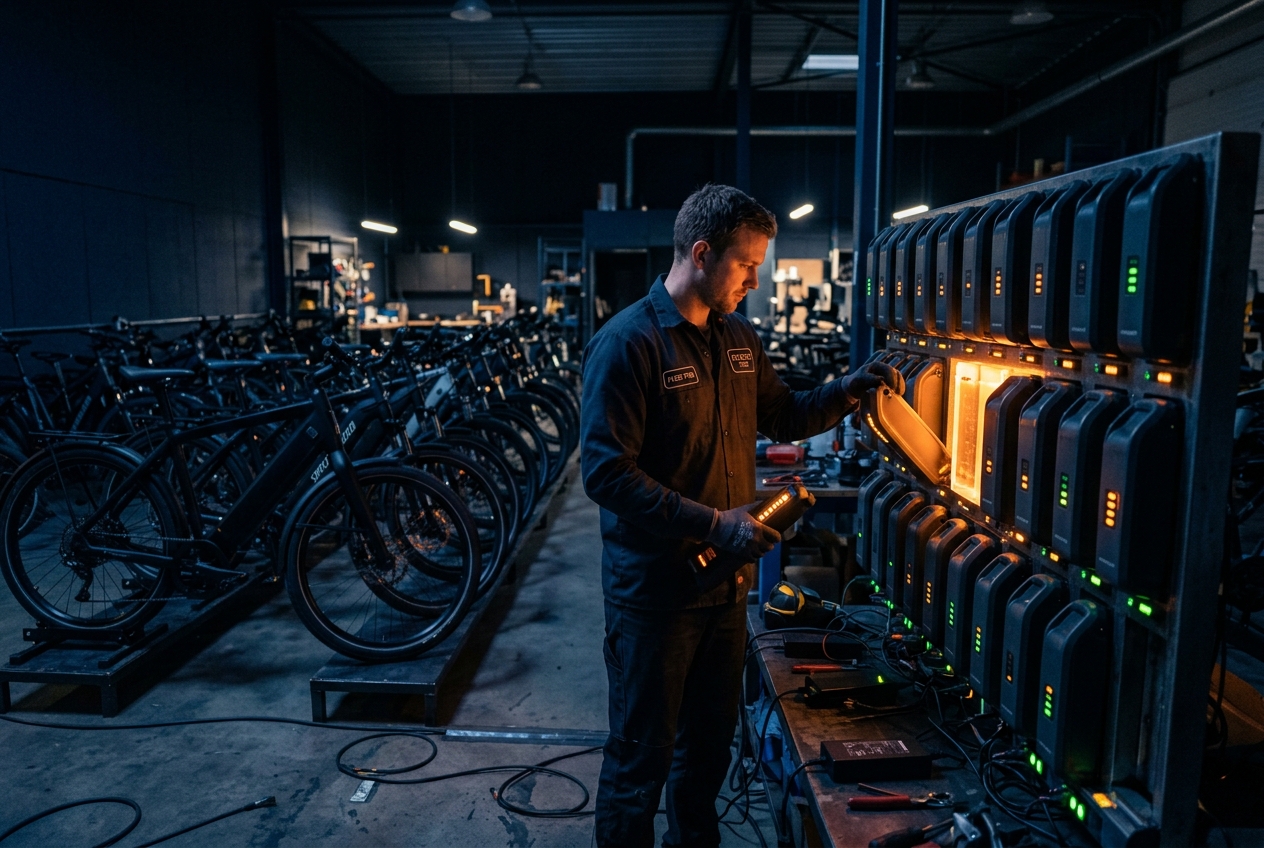
Every night, the system sends an automatic email to the field team with the exact list: bike, battery level and GPS location. No inspection rounds, no manual judgement.
3. Efficient charging route
The operator only touches listed bikes: swaps or charges batteries, checks the lock and marks the task. For 100 e-bikes with 20–30% below threshold, that's 90–120 minutes of work.
4. Photo incident logging
Any dent, puncture or fault detected is photographed from the WebApp itself. The photo is tied to the vehicle with date and time — the same evidence mechanism used in verified rental returns.
5. Monthly health review
With cycle and real-range data, identify batteries below 80% health and schedule them for replacement before they fail in service.
Extending life cycles: what the chemistry says
E-bike lithium batteries (Acton, Okai and compatible) deliver 500–800 full cycles. Three operating rules that extend life by up to 40%:
- Charge between 20% and 90%: systematic 100% charges stress the cells.
- Avoid deep discharges (<15%): the 35% threshold exists precisely to never get there.
- Temperature: charge indoors (10–25°C); never right after intensive summer use.
Preventive maintenance checklist
- Battery threshold set (35%) and nightly alert active
- Charging route documented: who, when, how many spare batteries
- Brakes and tyre pressure checked every 15 days
- Photo incident history up to date on every vehicle
- Monthly battery health review (cycles + real range)
- Bikes in maintenance marked unavailable in the panel (never visible to users)
Telemetry: what you need depending on your hardware
With integrated IoT (Acton, Okai) you get continuous real battery readings, diagnostics and motor lock. With smart locks (Linka, AXA IN, Omni), position and status arrive at reporting intervals and the vehicle's battery is managed with less frequent readings. Full detail in our smart locks and IoT guide.
Conclusion
Maintaining an electric fleet isn't a mechanics problem: it's a data and routine problem. Automate the threshold, the nightly alert and photo reporting, and field costs halve while batteries reach their full useful life. You can estimate the direct P&L impact in the fleet ROI analysis.
Frequently asked questions
How often should fleet e-bike batteries be charged?
Not by calendar, but by threshold: only bikes that drop below the defined operating level (35% recommended) get charged. Software with automatic nightly alerts lists exactly which ones need charging each night, eliminating unnecessary charges that degrade cells.
How many cycles does a fleet e-bike battery last?
Between 500 and 800 full charge cycles depending on chemistry and manufacturer — 2–4 years in fleet use. Avoiding 100% charges and discharges below 15% can extend useful life by up to 40%.
What's the difference between lock telemetry and integrated IoT telemetry?
Factory IoT (Acton, Okai) reads the vehicle's real battery continuously and can lock the motor. A smart lock reports its own battery and position at intervals, so the bike's charge level is managed with less frequent readings.
How are faults documented without paperwork?
The user or field operator attaches photos of the incident directly from the WebApp. Each vehicle accumulates a dated photo history, speeding up diagnosis, claims and replacement decisions.
FLEET OS
Calculate your fleet's ROI with a personalised demo
Use the interactive Fleet OS calculator to estimate your monthly fee and request a demo with your operation's real numbers. Reply within 24 business hours.
Calculate my ROI with Fleet OS