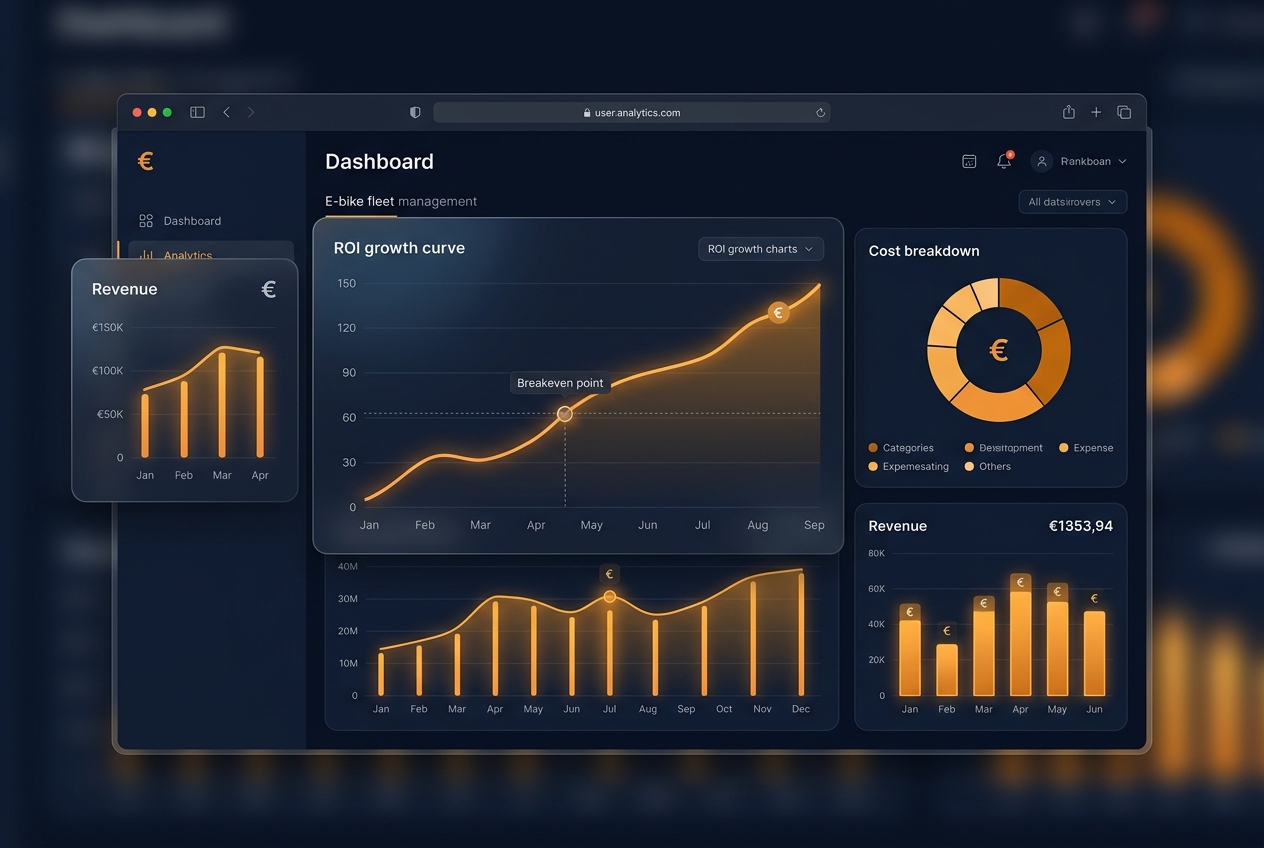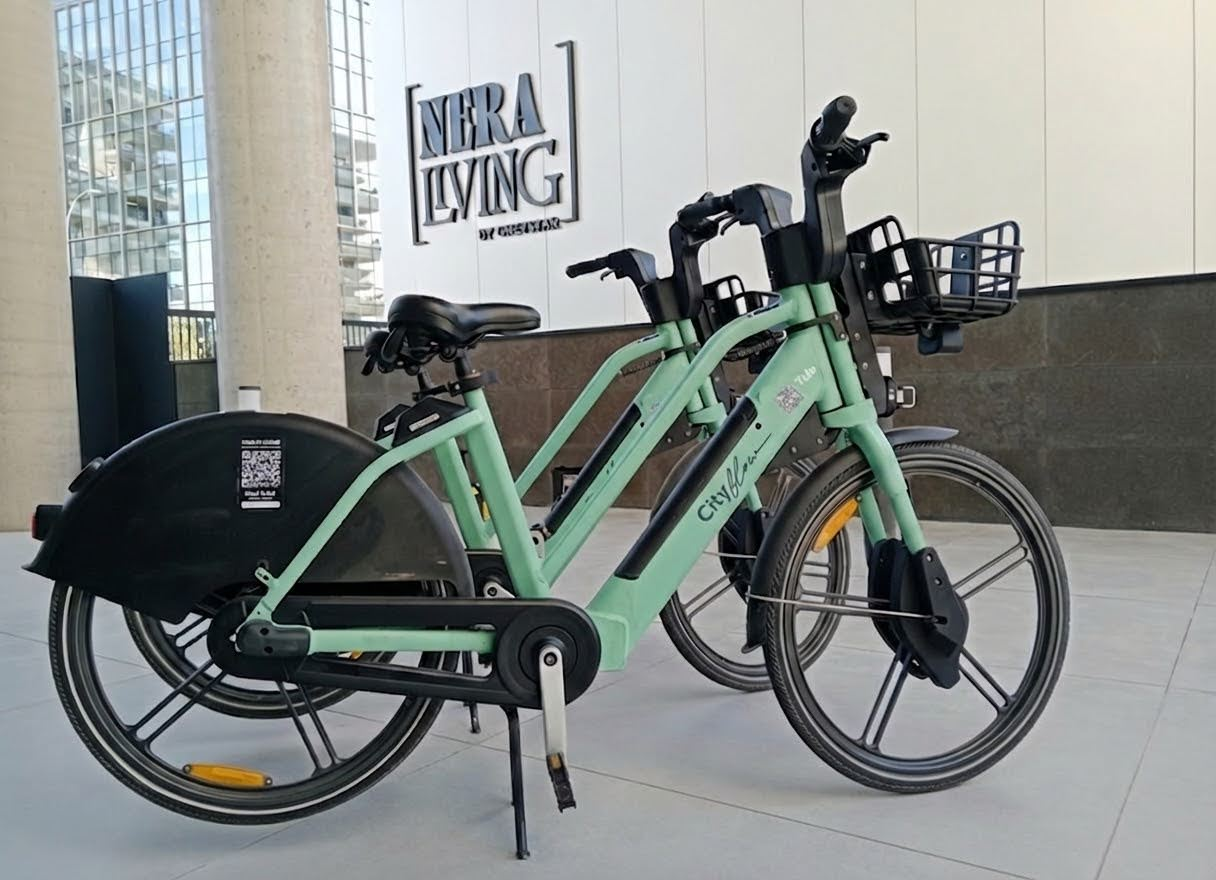
Direct answer: corporate sharing is a fleet of vehicles (usually e-bikes) exclusively for a company's employees, managed by software with email-domain-restricted access, real-time fleet control and configurable schedules. It can be deployed in 4 weeks with a mobility SaaS platform and an initial fleet of 10–30 vehicles.
Why corporate sharing is exploding in 2026
Three forces pushing at once:
- Regulation: sustainable workplace mobility plans are now mandatory for large companies in Spain, and CSRD requires reporting commuting emissions (Scope 3).
- Parking costs: a space in Madrid or Barcelona costs €150–300/month. One shared e-bike serves 5–8 employees for that price.
- Talent: mobility as a perk weighs increasingly in the employee value proposition, especially on campuses far from public transport.
How restricted access to corporate campuses works
The technical piece that separates corporate sharing from public sharing is access control:
- Domain-based registration: only @yourcompany.com emails can create an account. No outsider sees or uses the fleet.
- Campus geofences: bikes operate and are returned within the defined perimeter (HQ, campus, business park).
- Service hours: working-hours-only or 24/7 use, with automatic deactivation outside the window.
- Groups and permissions: separate fleets per site or department under the same master panel.
Meanwhile, the employee gets the same frictionless experience as a commercial sharing service: scan a QR, the WebApp opens in their language with no download, and the bike unlocks from the phone.
Real-time fleet control
The facilities or HR team sees in the panel:
- GPS location and battery of every vehicle, live.
- Who has each bike and since when.
- Automatic alerts: non-return, low battery, bike outside the geofence.
- Usage statistics: trips per employee, peak hours, total km — the basis of the ESG report.
Daily operations reduce to the nightly charging routine: an automatic email lists which e-bikes need battery. Nothing else.
Deployment in 4 steps (and 4 weeks)
- Week 1 — Design: number of vehicles (rule: 1 bike per 8–12 interested employees), parking locations and schedules.
- Week 2 — Hardware: e-bikes with smart locks or integrated IoT compatible with the platform (compatibility guide here).
- Week 3 — Software: onboarding to Fleet OS, domain setup, geofences, schedules and corporate branding (the WebApp wears your company's colours).
- Week 4 — Launch: internal comms, QRs in the car park and first rides. With no apps to install, adoption is immediate.
What the company gains
- Measurable ESG: km and CO₂ avoided, exportable to the sustainability report.
- Lower parking costs and fewer cars at peak hours.
- Employer branding: a visible, modern, photogenic benefit.
- Zero admin burden: charges (if any), access and support are handled by the software.
Conclusion
Corporate sharing is the sustainability programme with the best visibility-to-effort ratio a company can launch in 2026: four weeks, the budget of a handful of parking spaces and ESG data from day one. The key is the restricted-access software — and that's where Fleet OS makes it turnkey.
Frequently asked questions
How is fleet access restricted to employees only?
Through private access by email domain: only users with a corporate email (@yourcompany.com) can register and unlock vehicles. The company can also manage onboarding and offboarding from the panel in sync with HR.
What does a corporate sharing programme cost the company?
With a SaaS model like Fleet OS, the software costs €300/month + €5/vehicle. Adding leased e-bikes and maintenance, a 30-bike programme runs around €2,500–€3,500/month — less than 4 parking spaces in a major Spanish city.
Does corporate sharing count towards ESG goals?
Yes. Every e-bike trip replaces car kilometres and generates measurable data (trips, km ridden, CO₂ avoided) that the panel exports for the sustainability report (CSRD) and the workplace mobility plans required for large companies in Spain.
Can employees use the bikes outside working hours?
It's configurable. The software lets you define service hours (e.g. working hours only) with automatic deactivation outside those windows, or allow 24/7 use including weekends as an extra perk.
FLEET OS
Ready to see Fleet OS in action?
Request a demo and we'll show you the platform running with your brand and your fleet. Reply within 24 business hours.
Request a Fleet OS demo