Respuesta directa: para lanzar una operación de bicis compartidas sin fricción operativa necesitas 4 piezas: (1) un modelo de negocio definido (sharing público, rental turístico, corporate o estaciones), (2) hardware con candados inteligentes o IoT integrado, (3) un software de gestión de flotas con telemetría en tiempo real y cobros automáticos vía Stripe, y (4) una rutina de operación nocturna de baterías automatizada por alertas.
Paso 1 — Define el modelo de negocio antes de comprar nada
Cada modelo cambia el hardware, las tarifas y la operación:
- Public sharing: flota abierta a la ciudad, tarifas por minuto, geocercas.
- Rental & turista: alquileres por horas o días, reservas anticipadas, ideal hoteles y costa.
- Corporate sharing: flota privada para empleados de una empresa o campus.
- Estaciones de carga: operación basada en docks con disponibilidad controlada.
Un software moderno soporta los cuatro modelos en la misma licencia — así puedes pivotar sin migrar de plataforma.
Paso 2 — Elige hardware pensando en la integración
La bici es solo la mitad del hardware; la otra mitad es el candado o el IoT:
- Candados inteligentes (Linka, AXA IN, Omni): se abren desde el móvil vía Bluetooth/4G.
- IoT integrado de e-bike (Acton, Okai): telemetría de batería, GPS y bloqueo del motor.
Regla de oro: compra hardware que tu software ya soporte. Tienes el detalle completo en nuestra guía de candados inteligentes e IoT.
Paso 3 — El software: donde se gana o se pierde la operación
Telemetría en tiempo real
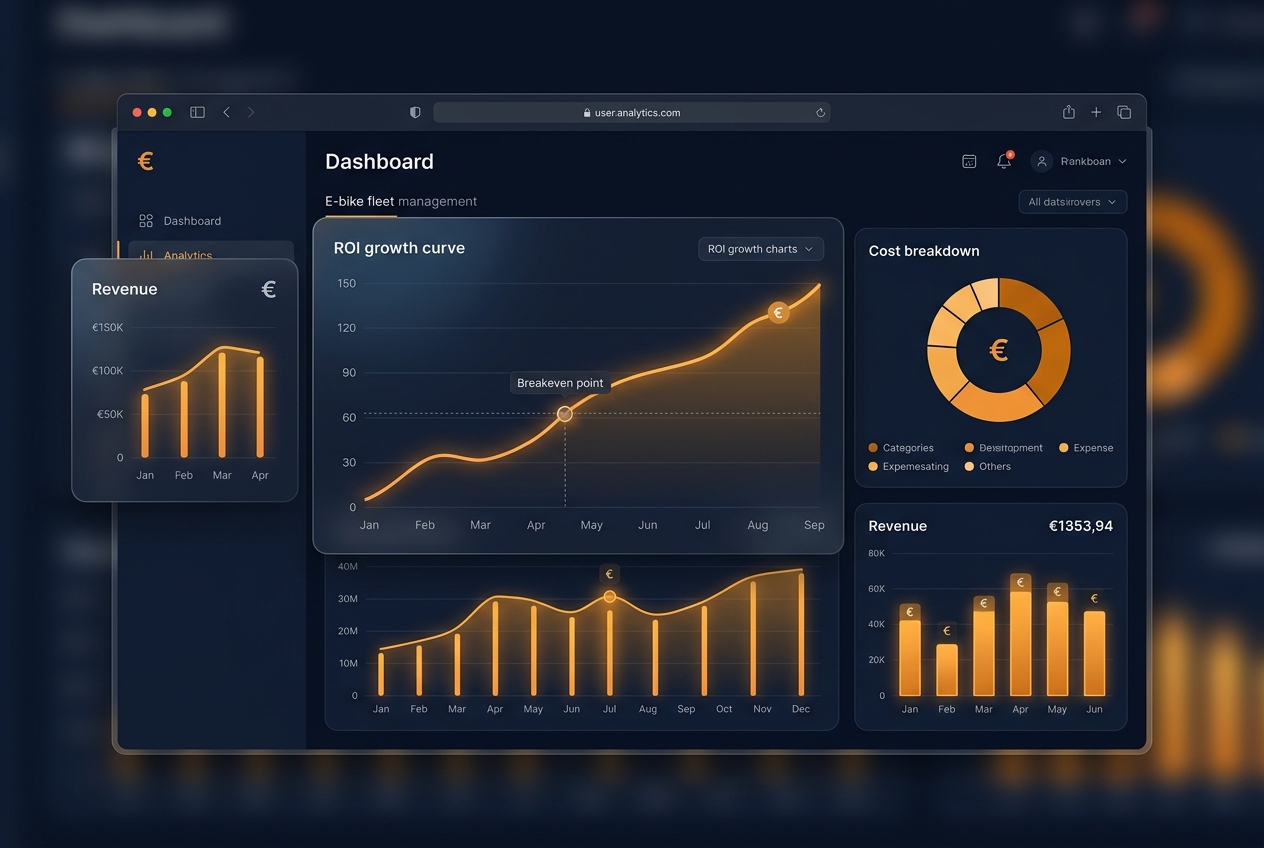
Sin telemetría, operas a ciegas. El panel debe mostrar por cada vehículo: ubicación GPS, nivel de batería, estado del candado y alquiler en curso. Y debe permitir comandos remotos: abrir, cerrar y desactivar fuera de horario.
Cobros automáticos con Stripe
El flujo que elimina el 90 % de la gestión manual:
- El usuario guarda tarjeta al iniciar (Apple Pay / Google Pay, también Alipay y WeChat Pay).
- El sistema cobra el alquiler al confirmar.
- Horas extra, penalizaciones por zona o impagos se cargan automáticamente a la tarjeta tokenizada.
WebApp en lugar de app nativa
Cada descarga obligatoria pierde usuarios. Con una WebApp, el funnel completo (escanear QR → pagar → desbloquear) dura menos de 60 segundos y funciona en el idioma del teléfono del usuario.
Paso 4 — La rutina nocturna de baterías
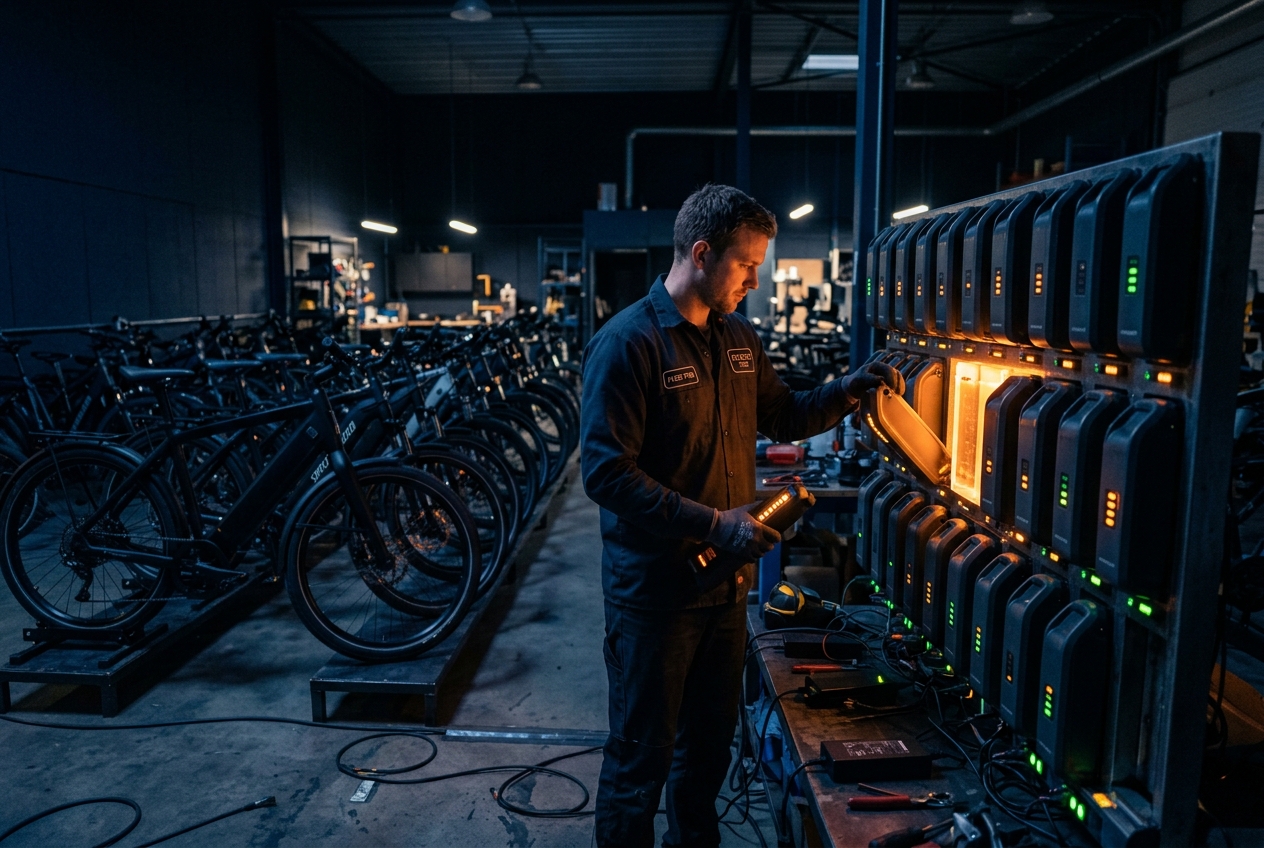
El mayor coste oculto del bike sharing eléctrico es mover baterías que no hacía falta mover.
- Configura un umbral de batería (p. ej. 35 %).
- El software envía cada noche un email automático con la lista exacta de bicis a cargar.
- El equipo de campo solo toca esas bicis: cero rondas de inspección manual.
Con esta rutina, un solo operario gestiona cómodamente 80-120 e-bikes.
Paso 5 — Escala con datos, no con intuición
Los KPIs que importan de verdad:
- Alquileres por bici y día (objetivo: >1,5 en temporada).
- % de flota operativa (objetivo: >92 %).
- Ingresos por vehículo y mes vs. coste total (software + mantenimiento + reposición).
Cuando los tres KPIs se mantienen 8 semanas, añade flota. Fleet OS no cobra mínimos ni tramos: añadir 50 bicis más solo cuesta 8 €/vehículo/mes.
Conclusión
Lanzar bicis compartidas en 2026 no es un problema de bicis: es un problema de software y proceso. Con la stack correcta —WebApp sin descargas, Stripe automático y alertas nocturnas de batería— la operación diaria cabe en menos de 2 horas de trabajo de campo. Si estás comparando plataformas, empieza por nuestra comparativa de software de gestión de flotas 2026.
Preguntas frecuentes
¿Cuántas bicis necesito para lanzar una operación de bike sharing?
Con software sin mínimos de flota como Fleet OS puedes lanzar desde 10-20 bicicletas en una ubicación concentrada (un hotel, un campus, un barrio) y escalar según demanda real. El error clásico es empezar con 200 bicis dispersas sin datos de demanda.
¿Cómo se cobran las penalizaciones y horas extra automáticamente?
Mediante una pasarela con tarjeta tokenizada: el usuario guarda su tarjeta al iniciar (Stripe, con Apple Pay y Google Pay) y el sistema carga automáticamente horas extra, devoluciones fuera de zona o impagos, sin intervención manual del operador.
¿Qué es la optimización de baterías nocturnas?
Es el proceso de decidir cada noche qué e-bikes necesitan carga o cambio de batería. Un buen software envía un email automático nocturno con la lista exacta de bicis bajo el umbral de batería, para que el equipo de campo solo toque las necesarias.
¿Necesito una app nativa para operar bicis compartidas?
No. Una WebApp accesible por QR elimina el mayor punto de abandono del funnel (la descarga). El usuario escanea, paga y desbloquea desde el navegador en menos de un minuto, en su propio idioma.
FLEET OS
¿Listo para ver Fleet OS en acción?
Solicita una demo y te enseñamos la plataforma funcionando con tu marca y tu flota. Respuesta en menos de 24 horas laborables.
Solicitar demo de Fleet OS